Amos Tversky â€å“features of Similarityã¢â‚¬â Psychological Review
| Amos Tversky | |
|---|---|
 | |
| Born | Amos Nathan Tversky (1937-03-sixteen)March 16, 1937 Haifa, British Mandate of Palestine |
| Died | June 2, 1996(1996-06-02) (aged 59) Stanford, California, U.S. |
| Nationality | Israeli |
| Alma mater | University of Michigan Hebrew Academy |
| Known for | Prospect theory Heuristics and biases |
| Spouse(south) | Barbara Tversky (thousand. 1963) |
| Awards | MacArthur Laurels Grawemeyer Honor in Psychology (2003) |
| Military career | |
| Fidelity | Israel |
| Service/ | Israel Defense Forces |
| Rank | Seren (Captain) |
| Battles/wars |
|
| Scientific career | |
| Fields | Cerebral psychology, Behavioral economics |
| Institutions | Hebrew University Stanford University |
| Doctoral students |
|
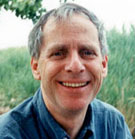
Amos Nathan Tversky (Hebrew: עמוס טברסקי; March 16, 1937 – June 2, 1996) was an Israeli cognitive and mathematical psychologist and a primal effigy in the discovery of systematic human cerebral bias and handling of run a risk.
Much of his early work concerned the foundations of measurement. He was co-author of a three-volume treatise, Foundations of Measurement. His early on work with Daniel Kahneman focused on the psychology of prediction and probability judgment; later they worked together to develop prospect theory, which aims to explain irrational human economic choices and is considered one of the seminal works of behavioral economics.
Half dozen years later on Tversky's expiry, Kahneman received the 2002 Nobel Memorial Prize in Economic Sciences for the work he did in collaboration with Amos Tversky.[i] (The prize is not awarded posthumously.) Kahneman told The New York Times in an interview soon afterward receiving the accolade: "I experience information technology is a joint prize. We were twinned for more than a decade."[two]
Tversky also collaborated with many leading researchers including Thomas Gilovich, Itamar Simonson, Paul Slovic and Richard Thaler. A Review of General Psychology survey, published in 2002, ranked Tversky equally the 93rd nearly cited psychologist of the 20th century, tied with Edwin Deadening, John Dewey, and Wilhelm Wundt.[3]
Early life and didactics [edit]
Tversky was born in Haifa, British Palestine (now State of israel), as son of the Polish-born veterinarian Yosef Tversky and Lithuanian Jewish Jenia Tversky (née Ginzburg), a social worker who later became a fellow member of the Knesset representing the Mapai (Workers' Political party).[iv] Tversky had one sister, Ruth, 13 years his senior.
Tversky'southward mother has said he was self-taught in many areas, including mathematics.[5] In high school, Tversky took classes from literary critic Baruch Kurzweil, and befriended classmate Dahlia Ravikovich, who would get an laurels-winning poet.
Tversky received his bachelor's degree from Hebrew University of Jerusalem in Israel in 1961, and his doctorate from the Academy of Michigan in Ann Arbor in 1965. He had already developed a clear vision of researching sentence.[5]
Military service and career [edit]
During this fourth dimension he was also a member and leader in Nahal, an Israel Defense Forces program that combined compulsory military service with the establishment of agricultural settlements.[6]
Tversky served with distinction in the State of israel Defense Forces as a paratrooper, rise to the rank of captain and being decorated for bravery.[4] He parachuted in combat zones during the Suez Crisis in 1956, commanded an infantry unit during the Six-Day War in 1967, and served in a psychology field-unit during the Yom Kippur War in 1973.[vi]
Academic career [edit]
Bookish roles [edit]
Afterwards his doctorate, Tversky taught at Hebrew Academy. He then joined the faculty of Stanford University in 1978, where he spent the residual of his career.
Academic work [edit]
Work with Daniel Kahneman [edit]
Amos Tversky's about influential piece of work was done with his longtime collaborator, Daniel Kahneman, in a partnership that began in the belatedly 1960s. Their work explored the biases and failures in rationality continually exhibited in man decision-making.[6] Starting with their showtime paper together, "Belief in the Law of Small Numbers", Kahneman and Tversky laid out eleven "cerebral illusions" that impact human judgment, oftentimes using pocket-sized-scale empirical experiments that demonstrate how subjects brand irrational decisions under uncertain weather. (They introduced the notion of cerebral bias in 1972.[seven]) This work was highly influential in the field of economics, which had largely presumed rationality of all actors.[8]
Co-ordinate to Kahneman the collaboration 'tapered off' in the early on 1980s, although they tried to revive information technology.[9] Factors included Tversky receiving most of the external credit for the output of the partnership, and a reduction in the generosity with which Tversky and Kahneman interacted with each other.[10]
Comparative ignorance [edit]
Tversky and Fox (1995)[eleven] addressed ambiguity aversion, the thought that people do not like ambiguous gambles or choices with ambiguity, with the comparative ignorance framework. Their idea was that people are simply ambiguity balky when their attention is specifically brought to the ambiguity by comparison an ambiguous option to an unambiguous option. For case, people are willing to bet more than on choosing a correct colored brawl from an urn containing equal proportions of black and blood-red balls than an urn with unknown proportions of balls when evaluating both of these urns at the same time. However, when evaluating them separately, people are willing to bet approximately the same amount on either urn. Thus, when it is possible to compare the ambiguous chance to an unambiguous chance people are balky — but not when one is ignorant of this comparison.
Notable contributions [edit]

- foundations of measurement
- anchoring and adjustment
- availability heuristic
- base rate fallacy
- conjunction fallacy
- framing
- behavioral finance
- clustering illusion
- loss aversion
- prospect theory
- cumulative prospect theory
- representativeness heuristic
- Tversky alphabetize
- support theory
- contrast model
- feature matching business relationship of similarity
Arroyo to research [edit]
Kahneman said that Tversky "had simply perfect taste in choosing bug, and he never wasted much time on annihilation that was not destined to thing. He also had an unfailing compass that always kept him going forward.[12]
Tversky'south 1974 Science article with Kahneman on cerebral illusions triggered a "cascade of related inquiry," Science News wrote in a 1994 commodity tracing the recent history of enquiry on reasoning. Conclusion theorists in economic science, business, philosophy and medicine every bit well equally psychologists cited their work.[13]
Recognition [edit]
In 1980 he became a fellow of the American University of Arts and Sciences.[6]
In 1984 he was a recipient of the MacArthur Fellowship, and in 1985 he was elected to the National Academy of Sciences.[14] Tversky, every bit a co-recipient with Daniel Kahneman, earned the 2003 University of Louisville Grawemeyer Laurels for Psychology.[15]
Subsequently Tversky's death, Kahneman was awarded the 2002 Nobel Memorial Prize in Economical Sciences for the work he did in collaboration with Tversky. Nobel prizes are not awarded posthumously.[i]
Personality and characteristics [edit]
Kahneman has said "Amos was the freest person I have known, and he was able to be free because he was too one of the nigh disciplined."[16]
Persi Diaconis, a professor of mathematics at Stanford, has said "You were happy existence in his presence. In that location was a low-cal shining out of him."[13]
Gerhard Casper, a professor of Behavioral Sciences at Stanford, said Tversky "maintained the highest standards of professional ethics", and "His dedication to Stanford and its institutions of faculty governance was exemplary."[13]
Whilst being very collaborative, Tversky also had a lifelong habit of working alone at night while others slept.[17]
In intellectual argue Tversky "wanted to crush the opposition".[18] [19]
Tversky believed that humans live under doubt, in a probabilistic universe.[20]
Personal life [edit]
In 1963 Tversky married American psychologist Barbara Gans, who subsequently became a professor in the homo-development department at Teachers College, Columbia University.[six] They had iii children together.
He died of a metastatic melanoma in 1996.[21]
He was a Jewish atheist.[22]
In popular culture [edit]
Tversky intelligence test [edit]
As recounted by Malcolm Gladwell in 2013'due south David and Goliath: Underdogs, Misfits, and the Fine art of Battling Giants, Tversky's peers thought then highly of him that they devised a natural language-in-cheek one-part examination for measuring intelligence. Equally related to Gladwell by psychologist Adam Change, the Tversky intelligence test was "The faster you lot realized Tversky was smarter than you, the smarter yous were."[23]
The Undoing Projection [edit]
Michael Lewis's book The Undoing Project: A Friendship That Inverse Our Minds, released in 2016, is almost Tversky'south personal and professional relationship with Daniel Kahneman.[24]
References [edit]
- ^ a b Altman, Daniel (x October 2002). "A Nobel That Bridges Economics and Psychology". The New York Times . Retrieved 14 March 2009.
- ^ Goode, Erica (5 November 2002). "A Conversation with Daniel Kahneman; On Profit, Loss and the Mysteries of the Mind". The New York Times . Retrieved 14 March 2009.
- ^ Haggbloom, Steven J.; Warnick, Renee; Warnick, Jason E.; Jones, Vinessa K.; Yarbrough, Gary L.; Russell, Tenea K.; Borecky, Chris M.; McGahhey, Reagan; et al. (2002). "The 100 most eminent psychologists of the 20th century". Review of Full general Psychology. 6 (2): 139–152. doi:10.1037/1089-2680.6.2.139. S2CID 145668721.
- ^ a b A Psychologist Who Shed Light on Our Irrationality Is Born Haaretz, 16 March 2016
- ^ a b Priceless: The Hidden Psychology of Value By William Poundstone
- ^ a b c d eastward Lewis, Michael (2017). The Undoing Project. New York: Due west. W. Norton & Company. ISBN978-0-393-35610-6.
- ^ Kahneman D, Frederick S (2002). "Representativeness Revisited: Attribute Exchange in Intuitive Judgment". In Gilovich T, Griffin DW, Kahneman D (eds.). Heuristics and Biases: The Psychology of Intuitive Judgment. Cambridge: Cambridge Academy Press. pp. 51–52. ISBN978-0-521-79679-8.
- ^ "Amos Tversky, leading decision researcher, dies at 59". Stanford University News Service. 1996-06-05. Retrieved 2017-12-25 .
- ^ "The Sveriges Riksbank Prize in Economic Sciences in Retention of Alfred Nobel 2002".
- ^ Michael Lewis. "The Undoing Project: A Friendship that Changed the World". Penguin, 2016 (ISBN 9780141983035)
- ^ Trick, Craig R.; Amos Tversky (1995). "Ambiguity Aversion and Comparative Ignorance". Quarterly Journal of Economic science. 110 (3): 585–603. CiteSeerX10.i.1.395.8835. doi:10.2307/2946693. JSTOR 2946693.
- ^ "The Sveriges Riksbank Prize in Economic Sciences in Memory of Alfred Nobel 2002".
- ^ a b c "Amos Tversky, leading decision researcher, dies at 59".
- ^ "National Academy of Sciences". nas.nasonline.org.
- ^ "2002- Daniel Kahneman and Amos Tversky". Archived from the original on 2015-07-23.
- ^ "The Sveriges Riksbank Prize in Economic Sciences in Retentivity of Alfred Nobel 2002".
- ^ "The Sveriges Riksbank Prize in Economic Sciences in Retentivity of Alfred Nobel 2002".
- ^ Kahnemnan, quoted in Michael Lewis, "The Undoing Project: A Friendship that Changed the Earth". Penguin, 2016 (ISBN 9780141983035)
- ^ Tversky..." didn't accept Danny'southward feeling that nosotros should all think together and work together. He thought "F*** You". Walter Mischel, quoted in Michael Lewis, "The Undoing Project: A Friendship that Changed the World". Penguin, 2016 (ISBN 9780141983035)
- ^ "People live nether doubt whether they like information technology or not..... Human being is a deterministic device thrown into a probabilistic Universe. In this friction match, surprises are expected." Notes made by Tversky for a scientific newspaper. Michael Lewis. "The Undoing Project: A Friendship that Inverse the World". Penguin, 2016 (ISBN 9780141983035).
- ^ Freeman, Karen (vi June 1996). "Amos Tversky, Expert on Decision Making, Is Dead at 59". The New York Times . Retrieved xiv March 2009.
- ^ Engber, Daniel. "How a Pioneer in the Science of Mistakes Concluded Upwardly Mistaken". Slate Magazine, 21 December 2016. "Information technology'due south a portrait of besotted opposites: Both Kahneman and Tversky were bright scientists, and atheist Israeli Jews...
- ^ Malcolm Gladwell, David and Goliath: Underdogs, Misfits, and the Fine art of Battling Giants, 2013, page 103
- ^ Engber, Daniel (21 December 2016). "The Irony Upshot". Slate . Retrieved 26 January 2017.
External links [edit]
-
 Quotations related to Amos Tversky at Wikiquote
 - Memorial Resolution - Amos Tversky
- Boston Globe: The man who wasn't in that location
- Daniel Kahneman – Autobiography
- Tversky in group discussion (39 mins) https://www.youtube.com/sentinel?v=BoiFo3MA0mc
- Tversky lecturing; https://www.youtube.com/watch?5=zO0oLX_WEYQ
Source: https://en.wikipedia.org/wiki/Amos_Tversky

Post a Comment for "Amos Tversky â€å“features of Similarityã¢â‚¬â Psychological Review"